

TV Dismounting: Our Comprehensive, Step-by-Step Guide

offer_banner_mobile
All Posts

If we’ve learned anything over the years, it’s that there are a few activities that are best done along with a friend – like riding a tandem bike, playing tennis, and taking down a wall-mounted television.

That’s why if you decide that it’s time for TV dismounting, you might think about calling in a favor. While it’s possible to take down a wall-mounted TV on your own, you’ll be thankful for the extra pair of hands.

In addition to a friend, there are a couple other things you want to make sure you have handy before beginning to dismount your TV: A flat and secure surface to lay your television on, preferably covered with a soft blanket, along with the proper tools for your particular TV mount. (For example, the proper size and type of screwdriver or the included key to undo safety locks, if there are any.)

Book your TV mounting service

 Once you’re all geared up, you’re ready to embark on the following steps:


1) Unplug everything

Make sure no sneaky cables remain plugged in. They can get tangled, making it difficult to maneuver the television, or impossible to remove from the wall. It’s important to unplug the cables carefully so that you don’t inadvertently damage the TV or accessories.


2) Give it a tilt

Puls TV dismounting

Gently reach under and behind the bottom of the television and try to lift it out towards you, leaving the top against the wall. If your TV is too big to lift on your own, book a service with our Puls technicians, who can do all the heavy lifting for you. Nevertheless, if the TV doesn’t angle out and lift up easily, it probably has safety locks. In that case, proceed to step 2a.


2a) Pop and unlock

There are a few different kinds of safety mechanisms that are meant to keep your television securely in place. Three of the most popular ones are: screw lock, probably towards the bottom of your TV with the screws pointed upward; bar lock, which slides horizontally in back of your TV; and the pull-string lock, often placed on either side of your television and opening by pulling down on each string.

If you’ve got your wall mount manual nearby, it will help you figure out which kind of lock your TV wall mount uses – but if not, you’ll just have to do a little snooping.

Opening up the safety lock is definitely one of the times you’ll appreciate having someone to lend a hand. If you have pull-string locks, you and your helper can each take one side of the TV, keeping it securely in place as you unlock from either side. If you have screw locks or bar locks, one person can make sure the television is safely secured while the other unlocks the mount.


3) The big dismount

Once you’re sure that the TV is free and clear, it’s time for the big dismount. Hopefully your dismount buddy hasn’t headed for the hills by now. Have each person grab an end of the TV and slowly lift the television set upwards – the goal is to lift the TV over the mount to get it free.

If you are doing this step by yourself, make sure that you’re in a good position to keep hold of your television set securely once it’s off of the mount and you’re supporting it yourself. Once you’re holding the television independently, carefully lay it face down on the prepared blanket so that the screen doesn’t scratch.  


4) Unscrew the mount from the television
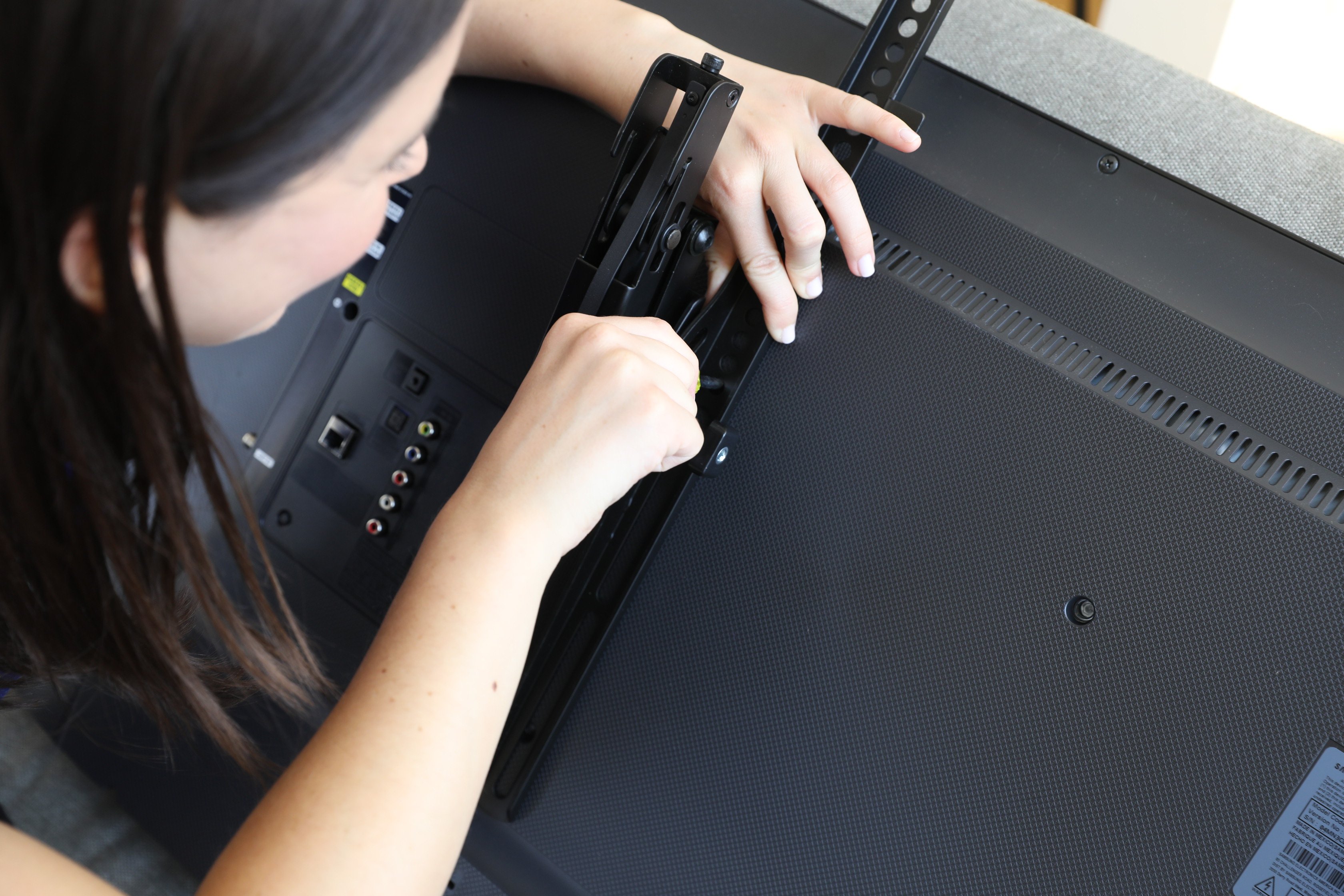
unscrew TV mount from TV

With the television face down on the soft cloth, you’ll see that the bracket is attached to the back of the TV with four screws – almost every wall mount uses the four-screw configuration. Now, getting the mount off if as easy as lefty-loosey.


5) Remove the wall mount from the wall

If you’re going to be spackling and painting your wall, or installing a new wall mount – a better TV wall mount – then you can do this step in a jiffy. Just use your prepared tools to unscrew the mount from the wall, much the same way you got it off the back of the TV set.

If you’re not planning on refinishing the wall in any way, it’s probably best to do this part somewhat carefully, doing your best not to further scuff or damage your wall.


Call in the experts

TV dismounting on wall Puls

Whether nobody is available to lend you a hand, you don’t want to do the heavy lifting yourself, or if you’re concerned over the well-being of your wall, it’s best to leave things to the professionals. That’s where Puls comes in.

We specialize in TV wall mount removal, and our expert technicians will be there within the same day to dismount yours, whenever it suits your schedule. Simply hop online and pick a time slot, and a certified Puls technician will be on their way to perform your TV dismount in no time!


Jake S.
Jake Sherman is a professional writer with a background in journalism. He is fascinated by home appliances and how they work. He enjoys breaking down complex topics and explaining them in interesting ways. He has been a Puls staff writer for two years. When he's not writing, he enjoys trotting around the globe, trying unfamiliar foods, and testing unmarked doors to see if they're locked.
Related Posts

Home maintenance can feel overwhelming when it’s framed as one endless checklist. When everything seems important at once, it’s easy to delay action altogether and hope nothing urgent pops up. A room-by-room strategy makes home care feel more manageable. Instead of thinking about your home as one big project, you focus on individual spaces. This makes it easier to notice small changes, address issues early, and avoid the kind of problems that grow quietly over time. Kitchen: Where Wear and Tear Adds Up Fast Kitchens combine water, electricity, heat, and daily use, which naturally increases the chances of things wearing down. Under-sink leaks, loose outlets, and aging fixtures are common early warning signs. Because many kitchen components are tucked away inside cabinets, small problems often stay hidden until damage spreads. Catching these issues early keeps repairs simpler, faster, and far less expensive. Bathrooms: Constant Moisture, Constant Risk Bathrooms deal with daily humidity, which puts ongoing stress on plumbing connections, fixtures, and surfaces. Slow drains, loose faucets, or subtle discoloration around fixtures are often the first signs that something needs attention. Moisture-related issues rarely resolve on their own. Addressing them early helps prevent mold growth, water damage, and structural problems that can disrupt your home and budget. Living Areas: Subtle Signals Matter In living rooms and bedrooms, maintenance issues often show up visually or electrically. Small wall cracks, flickering lights, or loose mounted items can indicate settling, wiring wear, or anchor problems inside the walls. Because these changes happen gradually, they’re easy to normalize. Paying attention early keeps fixes straightforward and prevents damage from spreading behind the scenes. Entryways and Hallways: High Traffic, High Stress Doors, frames, and walls in high-traffic areas experience constant movement and pressure. Sticking doors or shifting frames can be early signs of alignment issues or normal structural movement that needs adjustment. Handling these issues early keeps everyday wear from turning into long-term damage that affects multiple rooms. Laundry Areas: Small Spaces, Big Impact Laundry hookups are one of the most common sources of unnoticed leaks. Hoses, valves, and drains wear down slowly, and even minor drips can lead to significant water damage if left unchecked. Because laundry areas are often out of sight, problems here tend to go unnoticed longer than they should. Regular inspection and timely service can prevent costly flooring and wall repairs. Why a Room-by-Room Approach Works Breaking maintenance down by room helps homeowners feel more in control of their home. It creates a natural rhythm for checking key areas without feeling like everything needs attention at once. This approach also makes it easier to prioritize. Rooms with water, electricity, or heavy use naturally deserve more frequent attention than low-impact spaces. How This Strategy Helps With Budgeting Room-based maintenance spreads costs out over time instead of letting them pile up into emergency repairs. Small, planned fixes are easier to budget for than sudden, expensive problems. Homeowners who take this approach often find they spend less overall—not because they avoid repairs, but because they handle them at the right moment. Peace of Mind Comes From Knowing What’s Normal When you check your home consistently, you start to recognize what’s normal and what’s new. That awareness makes it easier to spot issues early and take action without panic. Instead of wondering whether something has “always been like that,” you can make informed decisions with confidence. Where Professional Help Makes the Biggest Difference Professional technicians understand how issues in one room can affect the rest of the home. A trained eye can spot early warning signs that aren’t obvious to homeowners. Puls technicians can inspect multiple areas efficiently and handle repairs across rooms and systems, making it easier to stay ahead of maintenance without juggling multiple service providers. Why Proactive Service Is Easier Than Reactive Repairs Emergency repairs often come with stress, scheduling pressure, and limited options. Proactive service allows homeowners to plan repairs around their schedule and avoid last-minute decisions. Calling a Puls tech early helps keep home maintenance predictable, manageable, and far less disruptive. Consistency Beats Perfection Home care isn’t about fixing everything at once or chasing an ideal standard. It’s about steady attention and timely action. A professional-first, room-by-room approach keeps your home running smoothly, protects its value, and helps you avoid costly surprises down the line.

  • 5 min read
  • 05/04/26

Staying on top of home maintenance doesn’t have to feel like a constant project. Most homeowners don’t need more reminders—they need a simpler way to organize what already matters. That’s where a monthly home maintenance calendar comes in. Instead of reacting to issues or juggling long checklists, a calendar-based approach creates a steady rhythm that keeps your home running smoothly throughout the year. Why Monthly Planning Feels Easier Big seasonal lists tend to show up all at once and demand attention when life is already busy. Monthly planning spreads things out so nothing feels urgent or overwhelming. When you know exactly what to focus on each month, home care becomes more predictable—and much easier to fit into real life. How the Puls Home Maintenance Calendar Is Structured The Puls home maintenance calendar is designed to reduce mental load, not add to it. Each month focuses on just three types of tasks, keeping things clear and manageable: Quick Wins Seasonal Must-Dos Call in a Pro Tasks This structure ensures that important maintenance stays on track without turning home care into a full-time job. Quick Wins: Light Tasks That Keep Things on Track Quick wins are small, low-effort actions that help maintain comfort and performance around the home. They’re designed to be fast, easy to remember, and satisfying to complete. These tasks help homeowners feel like they’re staying ahead without committing large amounts of time or energy. Seasonal Must-Dos: Staying in Sync With the Year Every season brings small shifts in how a home is used. Seasonal must-dos help align your home with those changes in a calm, planned way. Because these tasks are anticipated in advance, they don’t come with urgency or stress. They simply support comfort, efficiency, and everyday use as the year progresses. Call in a Pro: Built-In Professional Support Some maintenance tasks are best handled by a professional—not because something is wrong, but because it’s easier and more reliable that way. Each month includes at least one Call in a Pro task, giving homeowners a clear moment to bring in expert help and keep things handled properly without guesswork. Puls technicians fit seamlessly into this system, handling professional tasks efficiently and helping homeowners stay consistent without juggling multiple providers. Why This System Reduces Stress With only three task types to think about, maintenance stays focused and manageable. There’s no pressure to do everything at once, and no feeling that something critical is being missed. Homeowners following a calendar-based approach often feel more confident simply because they know what’s coming next. Consistency Without Perfection This system doesn’t rely on doing everything perfectly. Missing a task one month doesn’t derail anything—the calendar simply brings your focus back the next month. That flexibility is what makes monthly maintenance sustainable and realistic over time. A Calmer, More Organized Way to Care for Your Home When maintenance is predictable and supported, it stops feeling like a chore. It becomes part of the background—quietly supporting comfort, safety, and daily life. A monthly home maintenance calendar turns home care into a steady rhythm, and with Puls technicians available for professional tasks, staying on top of your home feels simple, not stressful.

  • 4 min read
  • 03/23/26

Even in mild climates, decks and fences are exposed to the elements every day. Sunlight fades color and weakens coatings, humidity causes wood to expand and contract, and soil movement shifts posts and support beams. Over time, this wear and tear leads to cracks, discoloration, and loose boards that can compromise safety and appearance.

  • 12 min read
  • 10/28/25