

iPhone 8 Screen Repair Cost: Puls vs. the Apple Store

offer_banner_mobile
All Posts

Apple has claimed the iPhone 8 to possess the most durable glass screen ever – and they might be right.

Before its release, some had speculated that the iPhone 8 would sport 5th generation Gorilla Glass, but one intrepid reporter confirmed that Apple had, in fact, collaborated with the makers of the world’s strongest glass to come up with its own “better than Gorilla Glass 5 material.”

Does this justify the iPhone 8 screen repair cost, which, while not as exorbitantly high as that of the iPhone X, is still significantly more than previous models? (The iPhone X screen repair cost, by the way, is a whopping $279 if not covered by warranty, and all other repairs cost $549. To put it lightly, treat the handset with care.)

With a “reinforced steel and copper structure” and a “50 percent deeper strengthening layer using our dual ion-exchange process,” there’s no doubt that as far as smartphones go, the iPhone 8 is indeed one of the toughest handsets out there.

Of course, that doesn’t mean that it’s indestructible.


iPhone 8 drop test

Iphone 8 drop testPhoto Credit: TechStout

Perhaps you’ve seen this CNET drop test of the iPhone 8, which mimics certain real-life – if at times extreme – conditions, including having your phone fall out of your pocket while you’re suspended upside-down on a roller-coaster.

While the roller coaster test may have been a foregone conclusion, the 5-foot drop onto concrete certainly wasn’t – but still, the iPhone 8 screen shattered immediately. (Although, this 6-foot drop onto plywood performed by Tomsguide had the iPhone 8 emerge unscathed.)

And yet, despite the obvious dangers of an iPhone plummeting naked onto the punishing concrete, a 2013 survey by the NPD group said that nearly one-in-four users don’t have a case on their smartphone. A much more recent, though highly unscientific, survey by Droidlife mirrors those numbers almost exactly.

Of course, a shattered iPhone 8 screen can occur with or without a case, as the cases themselves don’t claim to be 100% foolproof.

If your screen does happen to break, one of the first things to consider is exactly how much does iPhone 8 screen repair cost? 


High repair prices at the Apple Store

iphone8andiphone8plus-800x461Photo Credit: MacRumors

The answer depends on where you turn. Apple consistently has the highest prices in terms of iPhone 8 screen repair – after all, they’ve got huge Apple stores to maintain, and they still manage to make a significant chunk of change from small fixes like screen repairs. According to Apple, the current out-of-warranty iPhone 8 screen repair cost stands at $149 for the iPhone 8, and $169 for the iPhone 8 Plus (compared to $139 and $149 with Puls).

In addition to that, chances are as good as not that you’ll incur long wait times and delays in the replacement part availability, not to mention the fact that you’ve got to somehow make it to an Apple store during business hours.


Look to Puls for your iPhone 8 screen
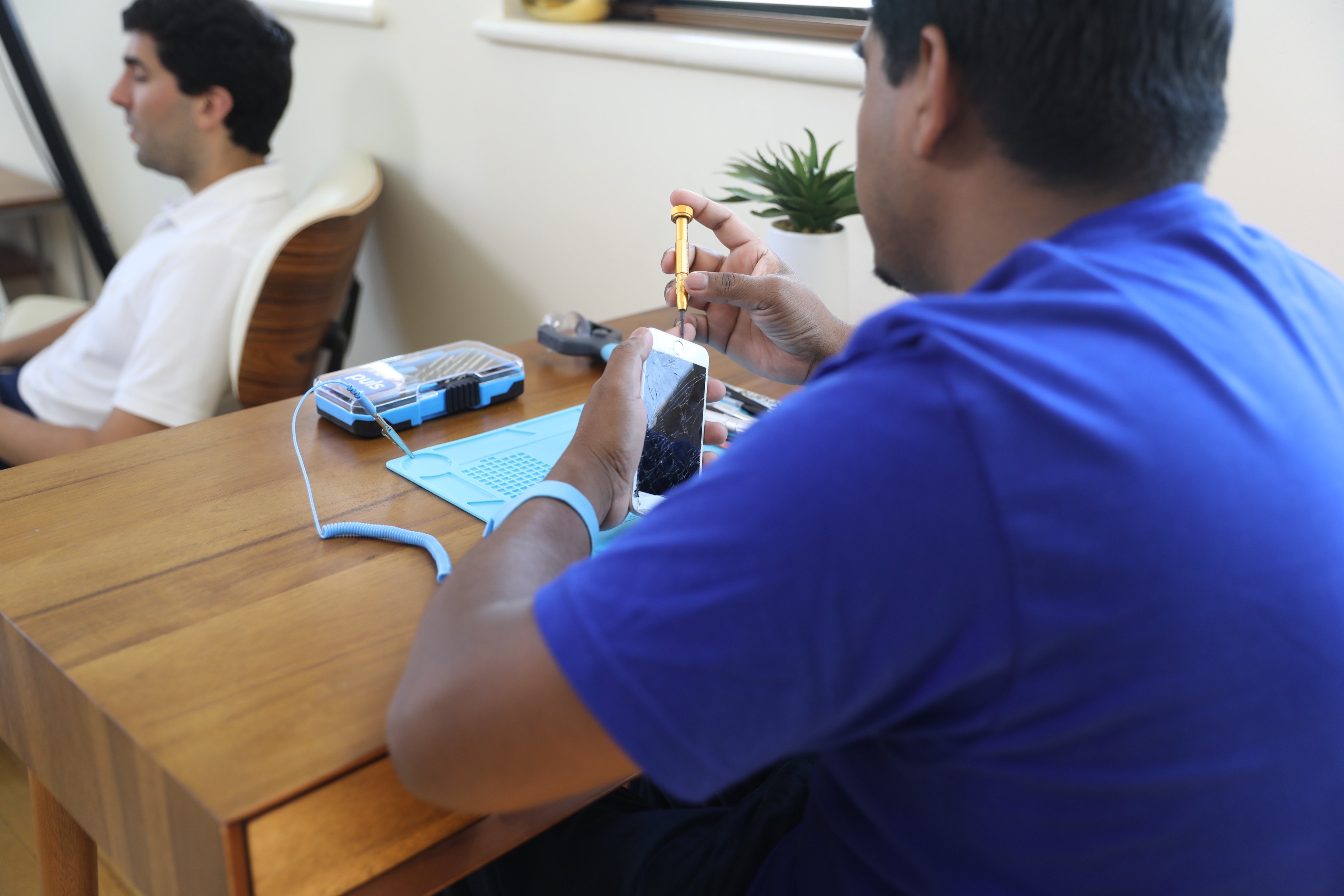
Puls iPhone 8 screen Fortunately, Puls offers a solution that is much more convenient and affordable – not only does Puls perform house calls, but we also take the savings from not having a brick and mortar store, and pass it on to you. Contrast that with the Apple store, which not only makes you stand in line, but makes you pay for it, too.

An iPhone 8 screen repair costs just $139 plus local tax with Puls, and $149 for an iPhone 8 Plus repair - $10 or $20 less than at the Apple Store. Our iPhone 8 screen repair services are available in select cities nationwide, including the Atlanta, Chicago, Los Angeles, Miami, New York City and San Francisco areas.

Booking an appointment with Puls can be done in seconds – simply enter the time and location that’s convenient for you, and a certified Puls technician will arrive to perform your repair. And, all parts and labor come with a lifetime guarantee. If only Apple could say the same. See what our customers say about us: Puls Reviews & Testimonials


Jake S.
Jake Sherman is a professional writer with a background in journalism. He is fascinated by home appliances and how they work. He enjoys breaking down complex topics and explaining them in interesting ways. He has been a Puls staff writer for two years. When he's not writing, he enjoys trotting around the globe, trying unfamiliar foods, and testing unmarked doors to see if they're locked.
Related Posts

Staying on top of home maintenance doesn’t have to feel like a constant project. Most homeowners don’t need more reminders—they need a simpler way to organize what already matters. That’s where a monthly home maintenance calendar comes in. Instead of reacting to issues or juggling long checklists, a calendar-based approach creates a steady rhythm that keeps your home running smoothly throughout the year. Why Monthly Planning Feels Easier Big seasonal lists tend to show up all at once and demand attention when life is already busy. Monthly planning spreads things out so nothing feels urgent or overwhelming. When you know exactly what to focus on each month, home care becomes more predictable—and much easier to fit into real life. How the Puls Home Maintenance Calendar Is Structured The Puls home maintenance calendar is designed to reduce mental load, not add to it. Each month focuses on just three types of tasks, keeping things clear and manageable: Quick Wins Seasonal Must-Dos Call in a Pro Tasks This structure ensures that important maintenance stays on track without turning home care into a full-time job. Quick Wins: Light Tasks That Keep Things on Track Quick wins are small, low-effort actions that help maintain comfort and performance around the home. They’re designed to be fast, easy to remember, and satisfying to complete. These tasks help homeowners feel like they’re staying ahead without committing large amounts of time or energy. Seasonal Must-Dos: Staying in Sync With the Year Every season brings small shifts in how a home is used. Seasonal must-dos help align your home with those changes in a calm, planned way. Because these tasks are anticipated in advance, they don’t come with urgency or stress. They simply support comfort, efficiency, and everyday use as the year progresses. Call in a Pro: Built-In Professional Support Some maintenance tasks are best handled by a professional—not because something is wrong, but because it’s easier and more reliable that way. Each month includes at least one Call in a Pro task, giving homeowners a clear moment to bring in expert help and keep things handled properly without guesswork. Puls technicians fit seamlessly into this system, handling professional tasks efficiently and helping homeowners stay consistent without juggling multiple providers. Why This System Reduces Stress With only three task types to think about, maintenance stays focused and manageable. There’s no pressure to do everything at once, and no feeling that something critical is being missed. Homeowners following a calendar-based approach often feel more confident simply because they know what’s coming next. Consistency Without Perfection This system doesn’t rely on doing everything perfectly. Missing a task one month doesn’t derail anything—the calendar simply brings your focus back the next month. That flexibility is what makes monthly maintenance sustainable and realistic over time. A Calmer, More Organized Way to Care for Your Home When maintenance is predictable and supported, it stops feeling like a chore. It becomes part of the background—quietly supporting comfort, safety, and daily life. A monthly home maintenance calendar turns home care into a steady rhythm, and with Puls technicians available for professional tasks, staying on top of your home feels simple, not stressful.

  • 4 min read
  • 03/23/26

Even in mild climates, decks and fences are exposed to the elements every day. Sunlight fades color and weakens coatings, humidity causes wood to expand and contract, and soil movement shifts posts and support beams. Over time, this wear and tear leads to cracks, discoloration, and loose boards that can compromise safety and appearance.

  • 12 min read
  • 10/28/25

As the chill of winter truly settles in, your home's heating systems are working overtime to keep you warm and comfortable. Among these vital systems, your water heater often goes unnoticed, quietly providing the hot water essential for everything from warm showers to clean dishes. But beneath its unassuming exterior, a silent threat might be undermining its performance, costing you money, and potentially shortening its life: sediment buildup.

  • 7 min read
  • 09/01/25