

65 Inch TV Wall Mounts: Everything You Need to Know

offer_banner_mobile
All Posts

Regardless of what your friends and family might say, if you think you need a 65 inch television to re-watch Downton Abbey for the third time, then by golly, that’s what you need. 

When you stroll home cradling all of that glorious screen real estate in your arms, don’t let your victory be muddied by any concerns about what kind of TV mount a 65 inch behemoth such as yours might require. Instead, we’ve done all of the homework for you. In our 65 inch TV wall mount guide, we tell you everything you need to know, so you can skip the hassle and get watchin’. 

What Kind of TV Mount 65 Inch TVs Require – And What You Need to Know About Your Walls
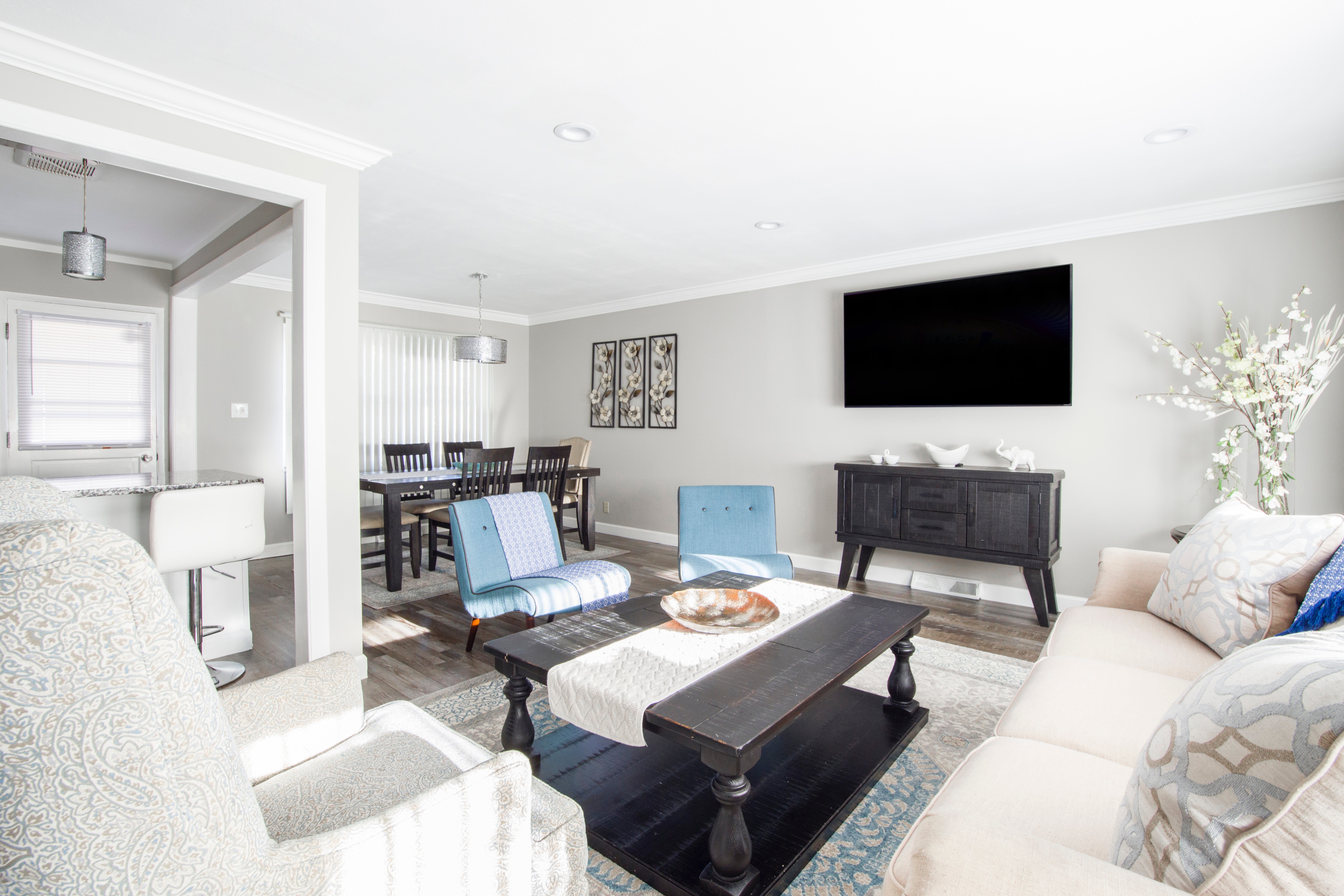
What Kind of TV mount 65 inch TVs requirePhoto by Milly Eaton from Pexels

To break it down, the main thing you’re looking for is a mount that fits the back of your TV. It should also be strong enough to support your TV’s weight. As long as these two criteria are met, you don’t really need to worry about much else. 

Fortunately, the Video Electronics Standards Association simplified things by applying a standard bracket configuration for the backs of televisions. 

Virtually all TVs are designed with back panels that follow this standard, and almost all wall mounts comply as well. This makes it a lot simpler to match up a TV with the right wall mount. Not all TVs have the exact same VESA size, but they’ve essentially narrowed it down to Big, Medium, or Small. 

To find out if a bracket will fit your TV:

  1. Look in your television’s product manual or on the box to see the VESA bracket size
  2. Check the wall mount to see if it matches the TV bracket size
  3. If you can’t find the VESA size in your TV’s product information, simply measure the distance between the bolt holes on the back of your TV, both across as well as up and down. Common VESA sizes are 200 millimeters by 200 millimeters, 400 x 400, and 600 x 600
  4. Also, check the weight of your TV in the product manual or on the box
  5. See how much weight the bracket is advertised as being able to support

You will also want to make sure your wall can support the weight of your TV:

  • For 65 inch televisions mounted on drywall, we recommend only mounting the bracket to the studs inside the wall
  • While companies do advertise plastic wall anchors that can help drywall hold significantly more weight than a standard bolt, we do not recommend using these for the kind of TV mount 65 inch televisions would require – as a 65 inch TV is most likely much heavier than even these wall anchors can handle

What to Know About a Full Motion 65 Inch TV Wall Mount

shutterstock_243102715While it may seem surprising that an extendable articulating arm is capable of supporting so much weight, you can absolutely get a full motion TV wall mount for a 65 inch television. 

However, we suggest you use caution when mounting a full motion bracket for a 65 inch television, as it’s extremely important to make sure that the wall is capable of supporting the weight. While it might be tempting to try and use plastic wall anchors, we highly recommend ensuring that your bracket is mounted securely to wall studs.

65 Inch Curved Wall Mount: Does it Exist?
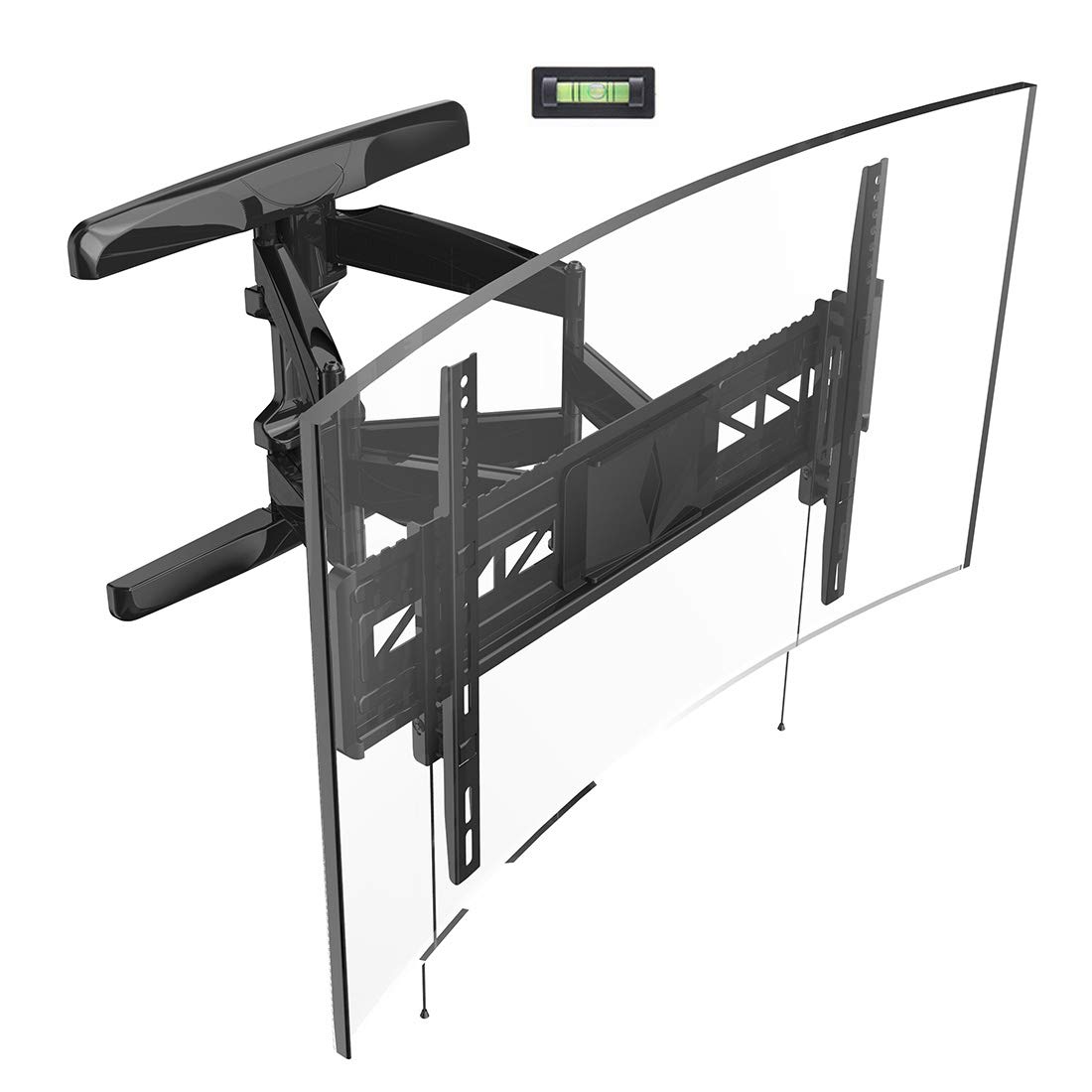
Is it possible to find a 65 inch curved wall mount? Yes!Loctek Curved TV Mount from Amazon 

Is there a TV mount 65 inch curved televisions are suited for? The answer is yes and no. First-generation curved TVs were not mountable, though nowadays some curved TVs can be mounted. When in doubt, it’s advisable to check the television product info before you buy, so you’re not stuck with a 65 inch curved TV that can’t be mounted. 

If You Took Advantage of a 65 Inch TV Walmart Deal, Try This Bracket, Too

You can find great 65 inch TV wall mounts at WalmartBarkan Full Motion TV Wall Mount from Walmart

We all know that Walmart has great deals on televisions – but did you know that you can also score big on a TV wall mount there?

Case in point: This television mount from Barkan is not only priced low, it delivers big. Supporting 88 pounds and with 4 different movements (up and down, side to side, swivel, and tilt), this mount also sports a super slim profile, fits both curved and flat TVs, and is adjustable from anywhere between 32 to 70 inches. 

Of course, this is just one of hundreds of wall mounts for 65 in TV Walmart sells. 

Getting the Right Wall Mount for 65 Inch Samsung TV Sets

Samsung offers this no-gap wall mount that’s adjustable for TVs anywhere between 49 to 65 inches – but do you absolutely need to get a Samsung brand mount to match up with a Samsung TV? The answer is definitely not. 

While the above is a perfectly fine bracket, Samsung TVs are among the legions that comply with VESA standards, and can be mounted with any VESA compatible TV wall mount. So, if you’re looking for a fully articulating full-motion TV mount, knock yourself out. And you know we’re always here to help you get that thing up on the wall. 

Puls Can Mount It For You – And Bring the Perfect Mounting Bracket

Book a time slot with Puls and let your technician take the guesswork out of your installation. Our certified technicians will put their professional know-how to work finding the optimal viewing location, bracket type, and mounting technique for your TV, so you don’t have to worry about lighting, eye level, wall material, or anything other than where you left the remote. 

Need a bracket? No problem - we can bring one for you. Not sure where to place it? We’ll help you find the perfect spot.

Plus, all of our services come backed by our 90-day guarantee, so you know your TV is in good hands. So, what are you waiting for? You could be watching your favorite shows and movies as soon as tonight. 

Book TV mounting


Jake S.
Jake Sherman is a professional writer with a background in journalism. He is fascinated by home appliances and how they work. He enjoys breaking down complex topics and explaining them in interesting ways. He has been a Puls staff writer for two years. When he's not writing, he enjoys trotting around the globe, trying unfamiliar foods, and testing unmarked doors to see if they're locked.
Related Posts

Home maintenance can feel overwhelming when it’s framed as one endless checklist. When everything seems important at once, it’s easy to delay action altogether and hope nothing urgent pops up. A room-by-room strategy makes home care feel more manageable. Instead of thinking about your home as one big project, you focus on individual spaces. This makes it easier to notice small changes, address issues early, and avoid the kind of problems that grow quietly over time. Kitchen: Where Wear and Tear Adds Up Fast Kitchens combine water, electricity, heat, and daily use, which naturally increases the chances of things wearing down. Under-sink leaks, loose outlets, and aging fixtures are common early warning signs. Because many kitchen components are tucked away inside cabinets, small problems often stay hidden until damage spreads. Catching these issues early keeps repairs simpler, faster, and far less expensive. Bathrooms: Constant Moisture, Constant Risk Bathrooms deal with daily humidity, which puts ongoing stress on plumbing connections, fixtures, and surfaces. Slow drains, loose faucets, or subtle discoloration around fixtures are often the first signs that something needs attention. Moisture-related issues rarely resolve on their own. Addressing them early helps prevent mold growth, water damage, and structural problems that can disrupt your home and budget. Living Areas: Subtle Signals Matter In living rooms and bedrooms, maintenance issues often show up visually or electrically. Small wall cracks, flickering lights, or loose mounted items can indicate settling, wiring wear, or anchor problems inside the walls. Because these changes happen gradually, they’re easy to normalize. Paying attention early keeps fixes straightforward and prevents damage from spreading behind the scenes. Entryways and Hallways: High Traffic, High Stress Doors, frames, and walls in high-traffic areas experience constant movement and pressure. Sticking doors or shifting frames can be early signs of alignment issues or normal structural movement that needs adjustment. Handling these issues early keeps everyday wear from turning into long-term damage that affects multiple rooms. Laundry Areas: Small Spaces, Big Impact Laundry hookups are one of the most common sources of unnoticed leaks. Hoses, valves, and drains wear down slowly, and even minor drips can lead to significant water damage if left unchecked. Because laundry areas are often out of sight, problems here tend to go unnoticed longer than they should. Regular inspection and timely service can prevent costly flooring and wall repairs. Why a Room-by-Room Approach Works Breaking maintenance down by room helps homeowners feel more in control of their home. It creates a natural rhythm for checking key areas without feeling like everything needs attention at once. This approach also makes it easier to prioritize. Rooms with water, electricity, or heavy use naturally deserve more frequent attention than low-impact spaces. How This Strategy Helps With Budgeting Room-based maintenance spreads costs out over time instead of letting them pile up into emergency repairs. Small, planned fixes are easier to budget for than sudden, expensive problems. Homeowners who take this approach often find they spend less overall—not because they avoid repairs, but because they handle them at the right moment. Peace of Mind Comes From Knowing What’s Normal When you check your home consistently, you start to recognize what’s normal and what’s new. That awareness makes it easier to spot issues early and take action without panic. Instead of wondering whether something has “always been like that,” you can make informed decisions with confidence. Where Professional Help Makes the Biggest Difference Professional technicians understand how issues in one room can affect the rest of the home. A trained eye can spot early warning signs that aren’t obvious to homeowners. Puls technicians can inspect multiple areas efficiently and handle repairs across rooms and systems, making it easier to stay ahead of maintenance without juggling multiple service providers. Why Proactive Service Is Easier Than Reactive Repairs Emergency repairs often come with stress, scheduling pressure, and limited options. Proactive service allows homeowners to plan repairs around their schedule and avoid last-minute decisions. Calling a Puls tech early helps keep home maintenance predictable, manageable, and far less disruptive. Consistency Beats Perfection Home care isn’t about fixing everything at once or chasing an ideal standard. It’s about steady attention and timely action. A professional-first, room-by-room approach keeps your home running smoothly, protects its value, and helps you avoid costly surprises down the line.

  • 5 min read
  • 05/04/26

Staying on top of home maintenance doesn’t have to feel like a constant project. Most homeowners don’t need more reminders—they need a simpler way to organize what already matters. That’s where a monthly home maintenance calendar comes in. Instead of reacting to issues or juggling long checklists, a calendar-based approach creates a steady rhythm that keeps your home running smoothly throughout the year. Why Monthly Planning Feels Easier Big seasonal lists tend to show up all at once and demand attention when life is already busy. Monthly planning spreads things out so nothing feels urgent or overwhelming. When you know exactly what to focus on each month, home care becomes more predictable—and much easier to fit into real life. How the Puls Home Maintenance Calendar Is Structured The Puls home maintenance calendar is designed to reduce mental load, not add to it. Each month focuses on just three types of tasks, keeping things clear and manageable: Quick Wins Seasonal Must-Dos Call in a Pro Tasks This structure ensures that important maintenance stays on track without turning home care into a full-time job. Quick Wins: Light Tasks That Keep Things on Track Quick wins are small, low-effort actions that help maintain comfort and performance around the home. They’re designed to be fast, easy to remember, and satisfying to complete. These tasks help homeowners feel like they’re staying ahead without committing large amounts of time or energy. Seasonal Must-Dos: Staying in Sync With the Year Every season brings small shifts in how a home is used. Seasonal must-dos help align your home with those changes in a calm, planned way. Because these tasks are anticipated in advance, they don’t come with urgency or stress. They simply support comfort, efficiency, and everyday use as the year progresses. Call in a Pro: Built-In Professional Support Some maintenance tasks are best handled by a professional—not because something is wrong, but because it’s easier and more reliable that way. Each month includes at least one Call in a Pro task, giving homeowners a clear moment to bring in expert help and keep things handled properly without guesswork. Puls technicians fit seamlessly into this system, handling professional tasks efficiently and helping homeowners stay consistent without juggling multiple providers. Why This System Reduces Stress With only three task types to think about, maintenance stays focused and manageable. There’s no pressure to do everything at once, and no feeling that something critical is being missed. Homeowners following a calendar-based approach often feel more confident simply because they know what’s coming next. Consistency Without Perfection This system doesn’t rely on doing everything perfectly. Missing a task one month doesn’t derail anything—the calendar simply brings your focus back the next month. That flexibility is what makes monthly maintenance sustainable and realistic over time. A Calmer, More Organized Way to Care for Your Home When maintenance is predictable and supported, it stops feeling like a chore. It becomes part of the background—quietly supporting comfort, safety, and daily life. A monthly home maintenance calendar turns home care into a steady rhythm, and with Puls technicians available for professional tasks, staying on top of your home feels simple, not stressful.

  • 4 min read
  • 03/23/26

Even in mild climates, decks and fences are exposed to the elements every day. Sunlight fades color and weakens coatings, humidity causes wood to expand and contract, and soil movement shifts posts and support beams. Over time, this wear and tear leads to cracks, discoloration, and loose boards that can compromise safety and appearance.

  • 12 min read
  • 10/28/25