

Battle of the Genders: Our Cell Phone Damage Report

offer_banner_mobile
All Posts

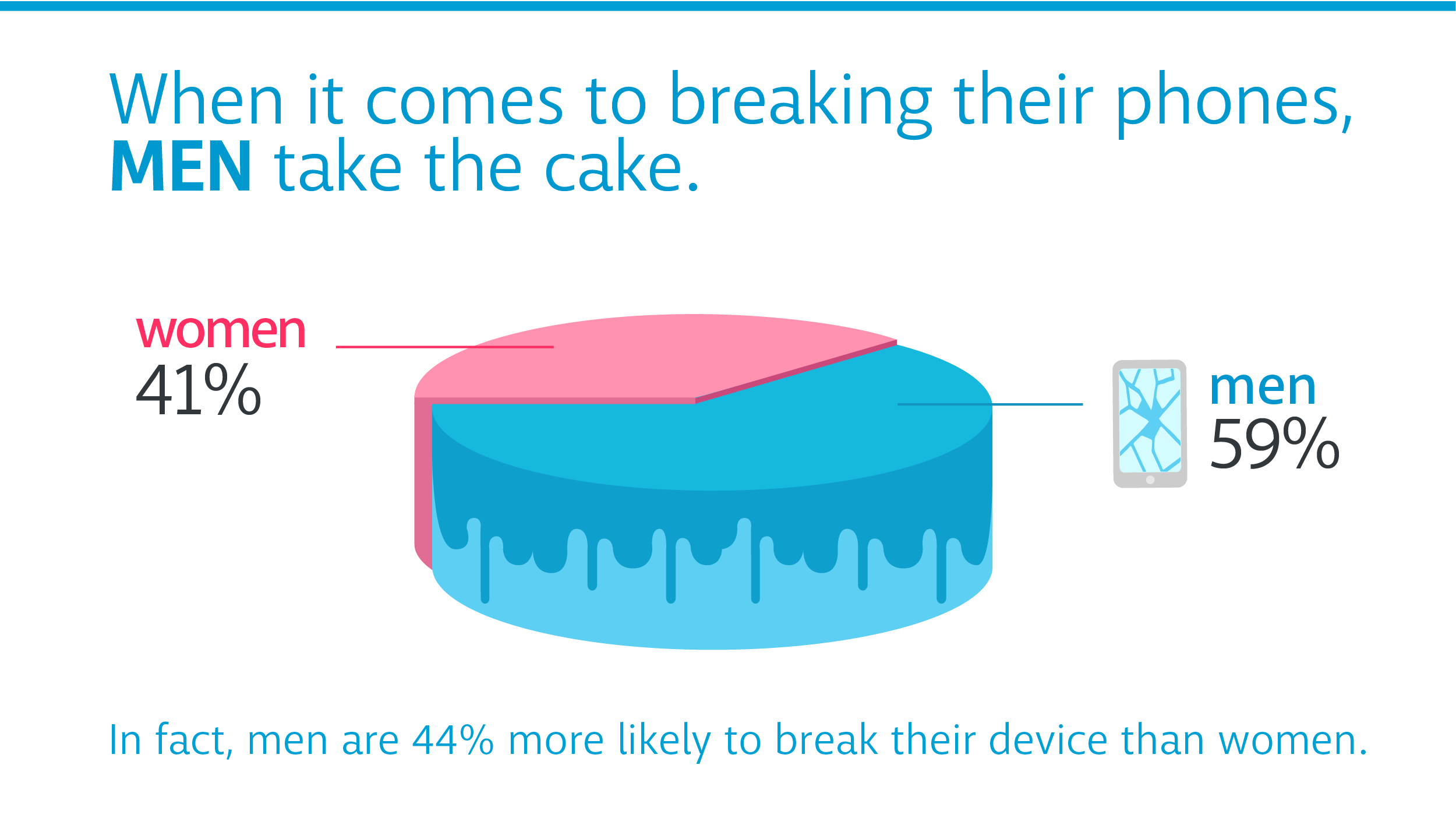
men vs women pie chart
Ever found yourself in an argument with a friend or partner about the distinctive—how should we put this—behaviors of the sexes? We aren’t here to weigh in definitively; technically, we’re not sociologists (though we read plenty of Wikipedia).

That said, next time the great men vs. women debate comes up, we’ve got new ammunition—for both sides. Although, we hate to say it, dudes: the news isn’t great for you.


Butterfingers: A Mostly Male Affliction?

Are men more careless than women? In the grand scheme of things, we can’t answer that question. But when it comes to cell phones, our data provides a clear “yes.”

We examined 1,000 anonymous customer interactions with technicians and crunched the numbers. Turns out, men are 44% more likely to break their smartphones. What’s the deal, guys? There is some evidence that men are worse at multitasking; maybe that’s the problem. Or are they so busy bro-hugging or chest-bumping that they lose their grip on their phone? 


Concentrations of Female Clumsiness

men vs women map of us


For men looking to retain some dignity, here’s some: these three cities are among the few places where you’re much better at keeping your phone safe than women.

      • St. Louis -  1.5x more likely to break their phone
      • Ft. Lauderdale -  2.5x more likely
      • Milwaukee -  2.5x more likely

On the other hand, there are a few cities where men fare even worse than their dismal nationwide average. In Atlanta, Denver, San Diego, and Seattle, men are twice as likely as women to need cell phone repair. And we’re not sure what’s going on with men in the Big Easy, but it sounds like they might be celebrating Mardi Gras year-round: men in New Orleans are nearly five times more likely to break their devices than women.  


Colors of Care
phone color graphic

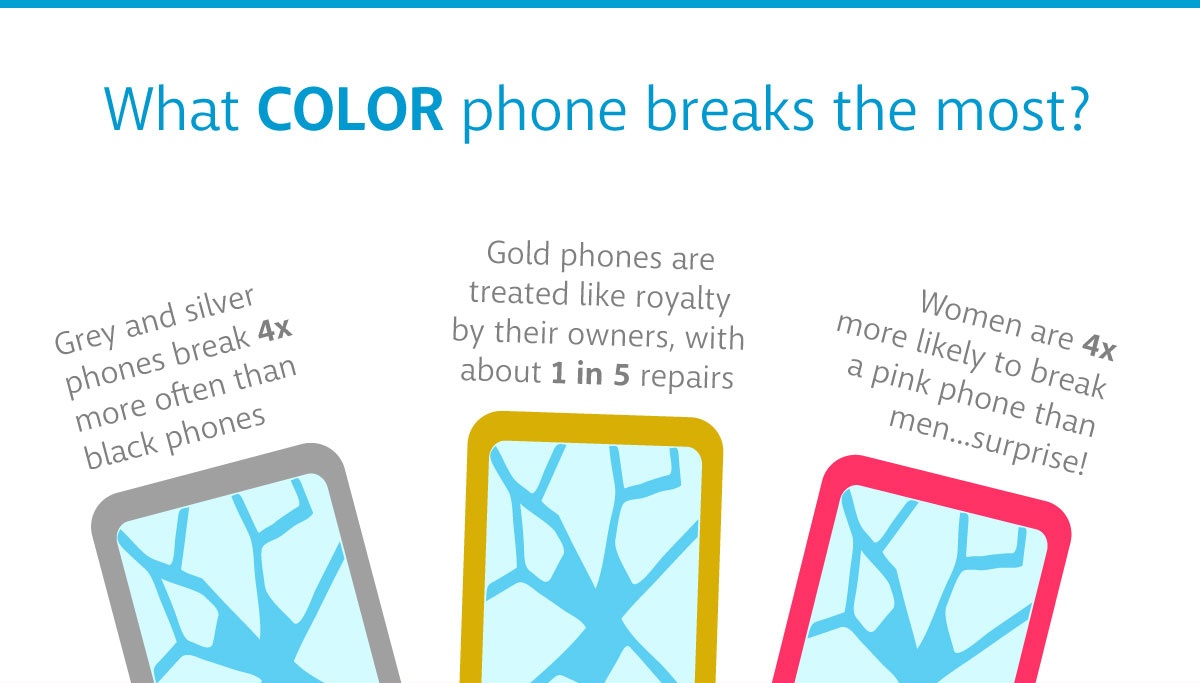
While we found many gender differences, we’re all just human beings at the end of the day. Several patterns in our data were gender-neutral; for one thing, people tend to take great care of black smartphones—maybe the aura of fashionability leads users to be cool, calm, and collected. Meanwhile, gray and silver phones break four times more often than black phones.

And while all that glitters is not gold, gold phones are treated like royalty by their owners—they need relatively less frequent repairs than other colors.

That said, differences between the sexes remain. We receive far more requests about broken pink phones from women than from men...surprise!  


Repair Breakdown
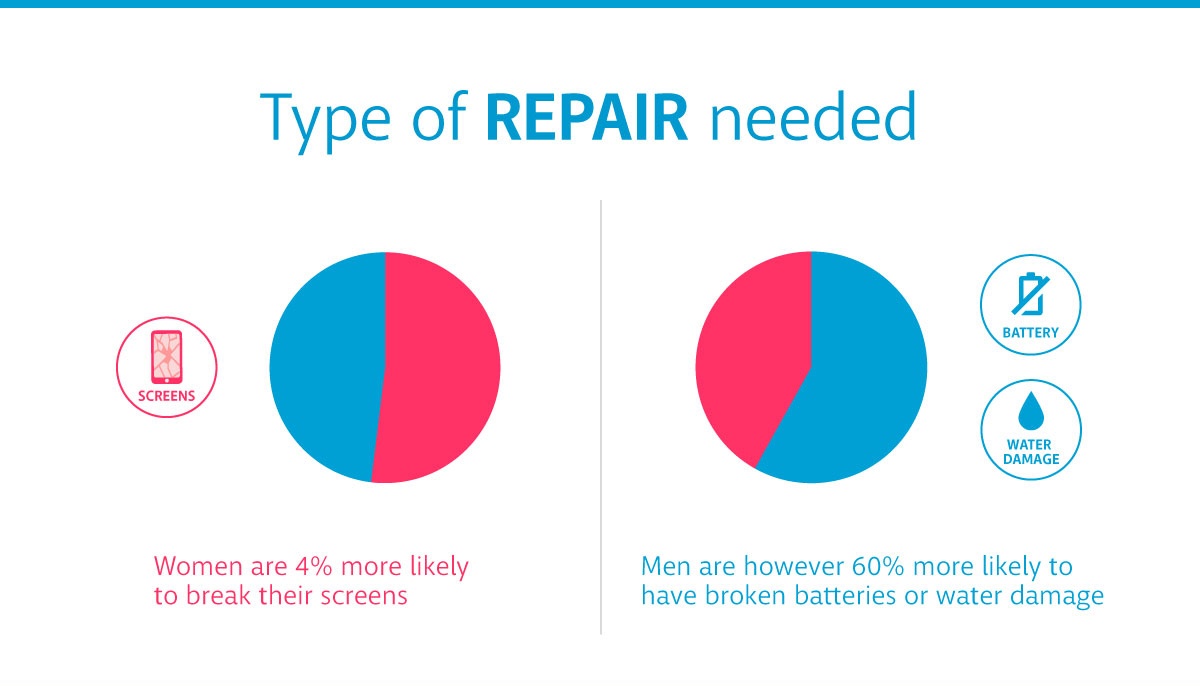
Types of repair needed: Women vs. Men

It’s traditionally been said that women are the more communicative sex, and there is some evidence that they text more often. All those thumb presses might be having a slightly negative effect; our data shows that women are 3% more likely to break their screens. That said, men take the cake for other types of breakage: their phones are 60% more likely to suffer broken batteries or water damage.  
Damage of device type by gender

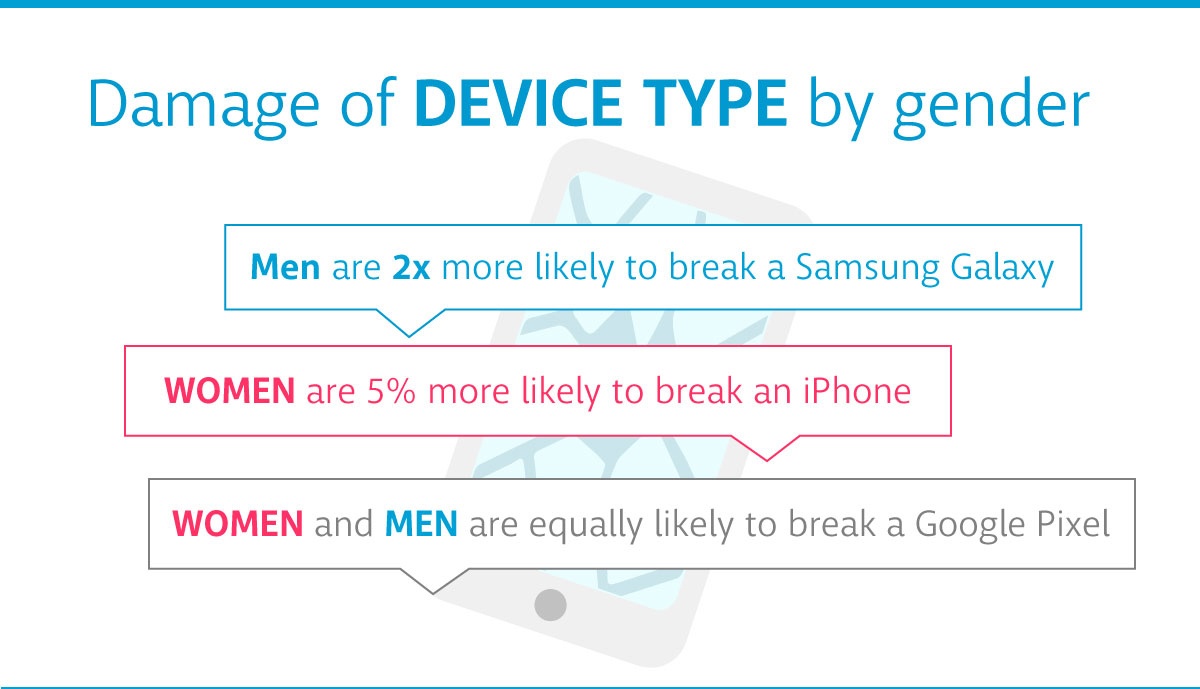
Brand-wise, our results are a mixed bag. Men and women are equally likely to break a Pixel device, but men are twice as likely to break a Galaxy, and women are about 5% more likely to break an iPhone.


Upshot

Gender differences aside, the reality is clear: a broken phone will ruin your day, whoever you are.

Cell phone problems never come at a good time, and the best day to get them resolved is always “now!” At Puls, we are your best option for super-quick, on-call cell phone repair—we service all major cities in America, including every location mentioned above, and we’re growing every day. When your digital life gets you down, we pick you back up. 

Jake S.
Jake Sherman is a professional writer with a background in journalism. He is fascinated by home appliances and how they work. He enjoys breaking down complex topics and explaining them in interesting ways. He has been a Puls staff writer for two years. When he's not writing, he enjoys trotting around the globe, trying unfamiliar foods, and testing unmarked doors to see if they're locked.
Related Posts

Staying on top of home maintenance doesn’t have to feel like a constant project. Most homeowners don’t need more reminders—they need a simpler way to organize what already matters. That’s where a monthly home maintenance calendar comes in. Instead of reacting to issues or juggling long checklists, a calendar-based approach creates a steady rhythm that keeps your home running smoothly throughout the year. Why Monthly Planning Feels Easier Big seasonal lists tend to show up all at once and demand attention when life is already busy. Monthly planning spreads things out so nothing feels urgent or overwhelming. When you know exactly what to focus on each month, home care becomes more predictable—and much easier to fit into real life. How the Puls Home Maintenance Calendar Is Structured The Puls home maintenance calendar is designed to reduce mental load, not add to it. Each month focuses on just three types of tasks, keeping things clear and manageable: Quick Wins Seasonal Must-Dos Call in a Pro Tasks This structure ensures that important maintenance stays on track without turning home care into a full-time job. Quick Wins: Light Tasks That Keep Things on Track Quick wins are small, low-effort actions that help maintain comfort and performance around the home. They’re designed to be fast, easy to remember, and satisfying to complete. These tasks help homeowners feel like they’re staying ahead without committing large amounts of time or energy. Seasonal Must-Dos: Staying in Sync With the Year Every season brings small shifts in how a home is used. Seasonal must-dos help align your home with those changes in a calm, planned way. Because these tasks are anticipated in advance, they don’t come with urgency or stress. They simply support comfort, efficiency, and everyday use as the year progresses. Call in a Pro: Built-In Professional Support Some maintenance tasks are best handled by a professional—not because something is wrong, but because it’s easier and more reliable that way. Each month includes at least one Call in a Pro task, giving homeowners a clear moment to bring in expert help and keep things handled properly without guesswork. Puls technicians fit seamlessly into this system, handling professional tasks efficiently and helping homeowners stay consistent without juggling multiple providers. Why This System Reduces Stress With only three task types to think about, maintenance stays focused and manageable. There’s no pressure to do everything at once, and no feeling that something critical is being missed. Homeowners following a calendar-based approach often feel more confident simply because they know what’s coming next. Consistency Without Perfection This system doesn’t rely on doing everything perfectly. Missing a task one month doesn’t derail anything—the calendar simply brings your focus back the next month. That flexibility is what makes monthly maintenance sustainable and realistic over time. A Calmer, More Organized Way to Care for Your Home When maintenance is predictable and supported, it stops feeling like a chore. It becomes part of the background—quietly supporting comfort, safety, and daily life. A monthly home maintenance calendar turns home care into a steady rhythm, and with Puls technicians available for professional tasks, staying on top of your home feels simple, not stressful.

  • 4 min read
  • 03/23/26

Even in mild climates, decks and fences are exposed to the elements every day. Sunlight fades color and weakens coatings, humidity causes wood to expand and contract, and soil movement shifts posts and support beams. Over time, this wear and tear leads to cracks, discoloration, and loose boards that can compromise safety and appearance.

  • 12 min read
  • 10/28/25

As the chill of winter truly settles in, your home's heating systems are working overtime to keep you warm and comfortable. Among these vital systems, your water heater often goes unnoticed, quietly providing the hot water essential for everything from warm showers to clean dishes. But beneath its unassuming exterior, a silent threat might be undermining its performance, costing you money, and potentially shortening its life: sediment buildup.

  • 7 min read
  • 09/01/25